
Iran Urges NGOs to Document Alleged US-Israeli War Crimes for International Tribunals
1-Click Audio Report (Universal Voice)
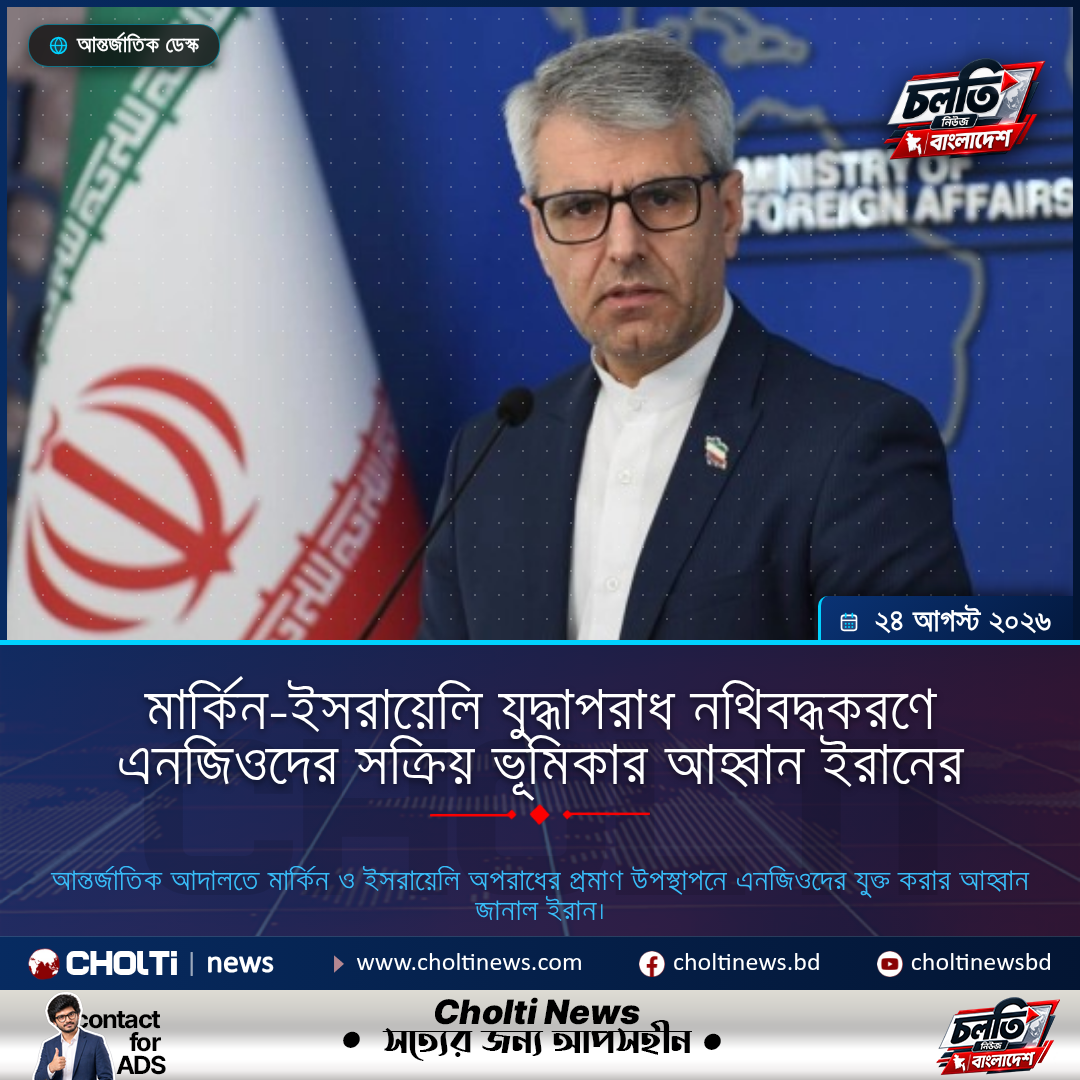
Tehran has called on non-governmental organizations (NGOs) to systematically document alleged human rights violations by the United States and Israel for presentation in international judicial forums. Iran believes that if global human rights organizations compile evidence of these actions, it will facilitate accountability in international courts in the future. This initiative sparks new debates regarding geopolitical tensions in the Middle East and the efficacy of international law.
- Iran's judiciary and human rights commission have urged international NGOs to gather evidence of alleged crimes committed during US and Israeli military operations.
- Tehran asserts that evidence compiled by non-governmental bodies will play a crucial role in prosecuting cases in international courts alongside traditional diplomatic channels.
- This move has ignited fresh global diplomatic debates over the enforcement of international law and human rights charters amidst ongoing Middle East conflicts.
National Investment & Sovereign Savings Bond Scheme
Secure high guaranteed yields backed by official treasury securities.
Amidst the ongoing volatile geopolitical situation in the Middle East, Iran has urged non-governmental organizations (NGOs) to systematically document alleged war crimes and human rights violations by the United States and Israel. Tehran emphasized that utilizing the global network of active NGOs is crucial for presenting concrete evidence of these alleged crimes in international judicial forums. This call comes at a time when military conflicts in Gaza and Lebanon have escalated severely, causing widespread civilian casualties that have deeply shaken global conscience. Iranian policymakers believe that information gathered by grassroots human rights organizations, rather than just state-level entities, will serve as the most potent tool to hold perpetrators accountable in international courts.
Historically, relations between Iran and Western powers have been adversarial, a friction that has intensified in recent years due to US sanctions and Israeli military actions. Although allegations of war crimes have been brought against Israel at the International Criminal Court (ICC) and the International Court of Justice (ICJ), final resolutions are often hindered by Western vetoes and diplomatic pressure. In this context, Iran believes that eyewitness testimonies, satellite imagery, and field reports compiled by independent NGOs can add a new dimension to these legal battles. Highlighting the statistics of civilian casualties and infrastructure damage from various military campaigns in the Middle East over the past decades, Tehran asserts that creating an unbiased and internationally acceptable archive is now an urgent necessity.
Following this proposal, high-ranking officials from Iran's judiciary and the High Council for Human Rights have initiated communications with various international human rights organizations. Conversely, Western analysts and diplomats argue that Iran is attempting to instrumentalize NGOs to advance its own geopolitical agenda. Meanwhile, many independent human rights activists point out that gathering data in war-torn regions is highly hazardous and requires adequate security and international protection. Nevertheless, local human rights groups in Palestine and Lebanon view Iran's call positively, hoping it will garner stronger support and resources from the broader international community.
While the role of NGOs in establishing the rule of international law and ensuring accountability for war crimes is undeniable, the process is frequently hampered by geopolitical polarization. As Iran calls for documenting US and Israeli actions, the international community must investigate all human rights violations impartially, free from specific political influences. Utilizing human rights issues solely for political leverage risks undermining the credibility of the global justice system itself. In the long run, establishing sustainable global peace requires a non-discriminatory and robust international legal framework that applies equally to all nations, regardless of their geopolitical stature.
“Iran's call sparks a new debate on the role of NGOs in the international justice system. Unless impartial investigations are ensured above geopolitical interests, these efforts to protect human rights risk devolving into mere political propaganda.”
Digital Innovation Summit 2026
Join South Asia's leading tech and AI entrepreneurship summit.