
Rahat Fateh Ali Khan Responds to Criticism Over Qawwali at Nusrat's Grave
1-Click Audio Report (Universal Voice)
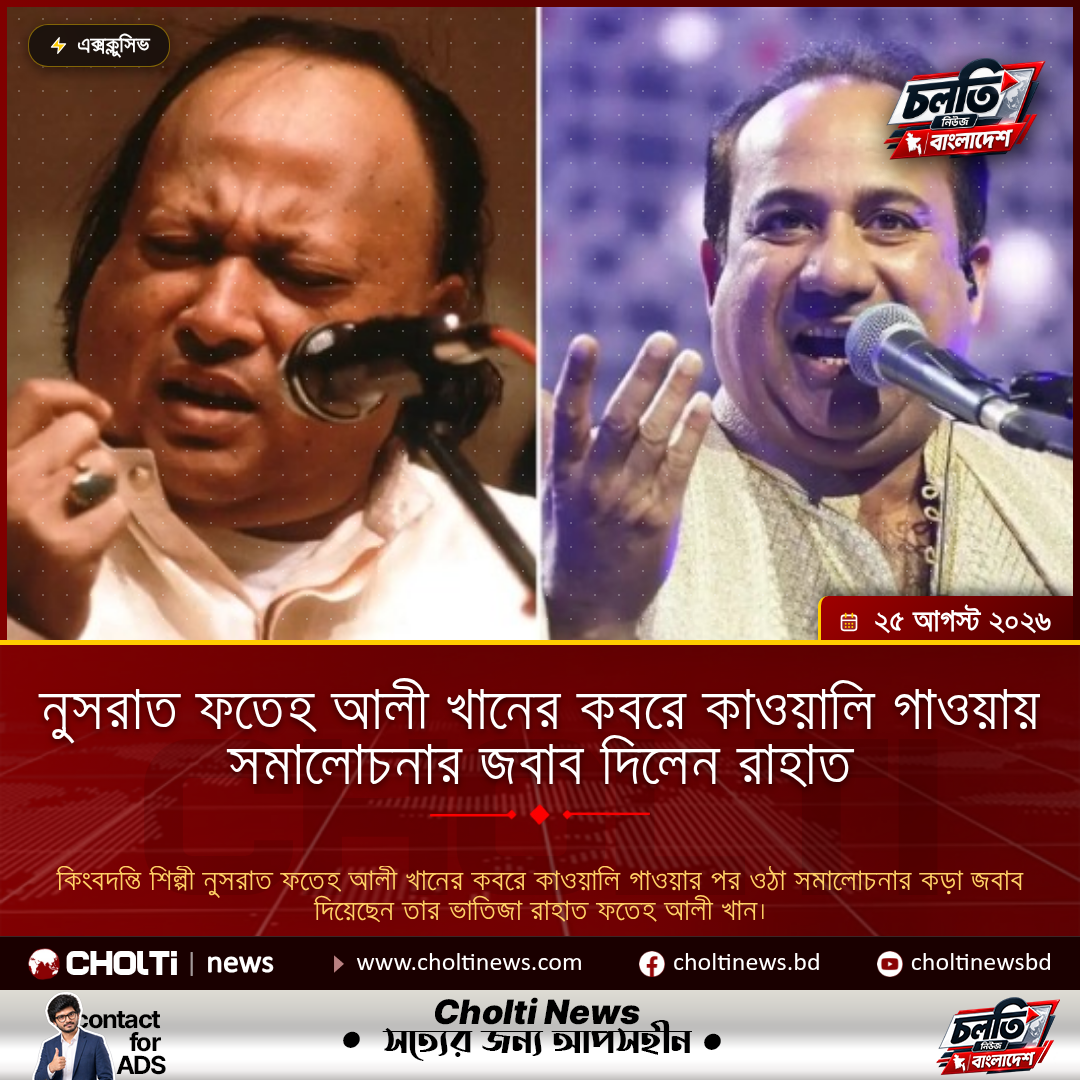
Rahat Fateh Ali Khan has strongly responded to criticism regarding the performance of Qawwali at the grave of legendary singer Nusrat Fateh Ali Khan, explaining it as a form of prayer and tribute.
- A video of Qawwali performance at Nusrat Fateh Ali Khan's grave sparked online controversy.
- Rahat Fateh Ali Khan defended the act, calling it a traditional Sufi way of paying tribute.
- He emphasized that Qawwali is not mere entertainment but a form of spiritual prayer.
National Investment & Sovereign Savings Bond Scheme
Secure high guaranteed yields backed by official treasury securities.
A controversy has erupted on social media after a video surfaced showing Qawwali being performed at the grave of the legendary Sufi singer Nusrat Fateh Ali Khan. Many netizens criticized the act, arguing that playing music near a grave is disrespectful. In response to the backlash, his nephew and prominent singer Rahat Fateh Ali Khan has come forward to defend the performance.
The incident took place during a gathering to mark the death anniversary of Nusrat Fateh Ali Khan in Faisalabad, Pakistan. Family members and devotees gathered at the mausoleum to pay their respects, which included reciting Qawwali. Once the video went viral, it divided social media users, with some claiming it violated the sanctity of the grave.
Addressing the critics, Rahat Fateh Ali Khan clarified that Qawwali is not commercial music or entertainment. He explained that in Sufi tradition, Qawwali is a form of devotion, prayer, and a way to connect with the Almighty. He added that since Nusrat Fateh Ali Khan dedicated his life to this spiritual art, performing it at his resting place is a fitting tribute, not disrespect.
The debate continues to trend online, highlighting the clash between orthodox religious views and Sufi cultural practices. While some continue to oppose the act on religious grounds, followers of the Sufi path stand firmly by the tradition. Rahat's explanation has shed light on the deep-rooted spiritual context of the performance.
“This incident highlights the ongoing tension between orthodox religious interpretations and Sufi cultural expressions. While critics view musical performances at graves as inappropriate, Sufi practitioners see Qawwali as a sacred, devotional act. Rahat Fateh Ali Khan's response serves to bridge this gap by explaining the spiritual intent behind the tribute.”
Digital Innovation Summit 2026
Join South Asia's leading tech and AI entrepreneurship summit.